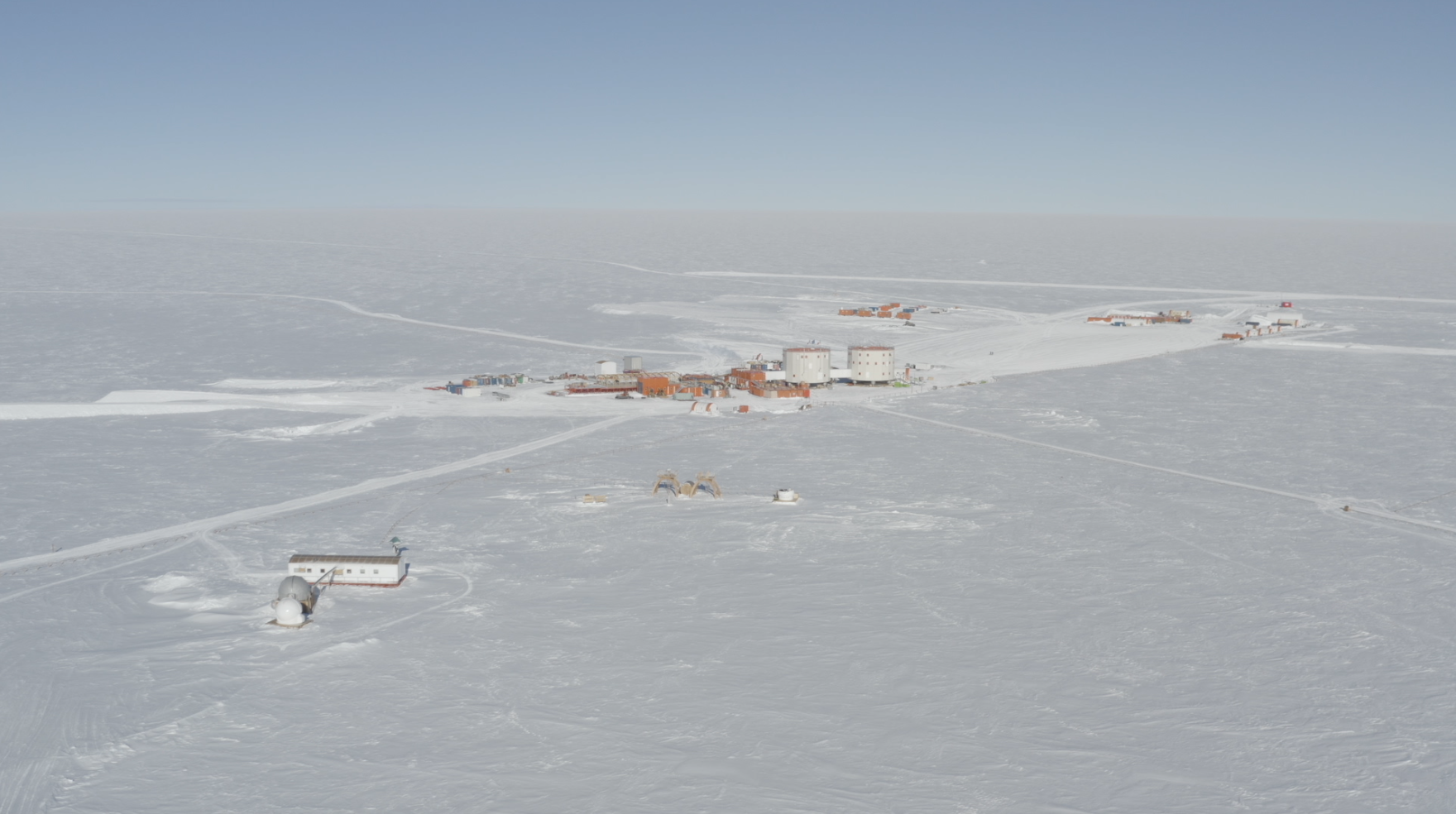
From the Alps to the Antarctic Plateau, precious ice cores carrying the memory of Earth’s past atmosphere are now safely stored at Concordia station in an ice cave at a temperature close to -52°C/-61°F year-round designed to preserve mountain ice for future generations of scientists.
The storing of the very first heritage cores in Antarctica marks a pivotal moment for the Ice Memory project launched in 2015 by CNRS, IRD, the University of Grenoble-Alpes (France), CNR, Ca’ Foscari University of Venice (Italy) and the Paul Scherrer Institute (Switzerland).
After a journey of more than fifty days aboard the Laura Bassi R/SV that began in Trieste (Italy), two first precious ice cores from the endangered Alpine glaciers collected with the support of the Ice Memory Foundation have successfully arrived at the French-Italian Concordia Station, in the heart of the Antarctic Plateau. The transport was handled by OGS in the framework of the Italian National Antarctic Research Program (PNRA).
Upon arrival, the cores were stored inside the Ice Memory Sanctuary, an ice cave excavated specifically to serve as a natural, long-term repository of ice archives, officially inaugurated today.
Within the framework of the UN Decade of Action for the Cryospheric Sciences, it clearly demonstrates the full feasibility of this effort to safeguard our planet's icy climate archives.
Trusting that advances in science and technology will unlock new scientific discoveries - even if the glaciers have disappeared - these ice cores represent a priceless legacy for future generations. They will provide a long-term resource for science and for evidence-based decision-making. As a time capsule, these ice cores contain the atmosphere of the past. They are now safeguarded for the decades and centuries to come, protected from any risk of loss
Share the linkCopyCopiedClose the modal windowShare the URL of this pageI recommend:Consultable at this address:La page sera alors accessible depuis votre menu "Mes favoris".Stop videoPlay videoMutePlay audioChat: A question? Chatbot Robo FabricaMatomo traffic statisticsX (formerly Twitter)