
The Ice Memory Protocol
Within the framework of the
Ice Memory Protocol, drilling operations are labeled according to scientific and preservation standards. These heritage ice cores will be stored in
Antarctica and contribute to a unique, global and
open-access Ice Memory Database.
Read the Ice Memory Protocol
When ice reveals the history of life
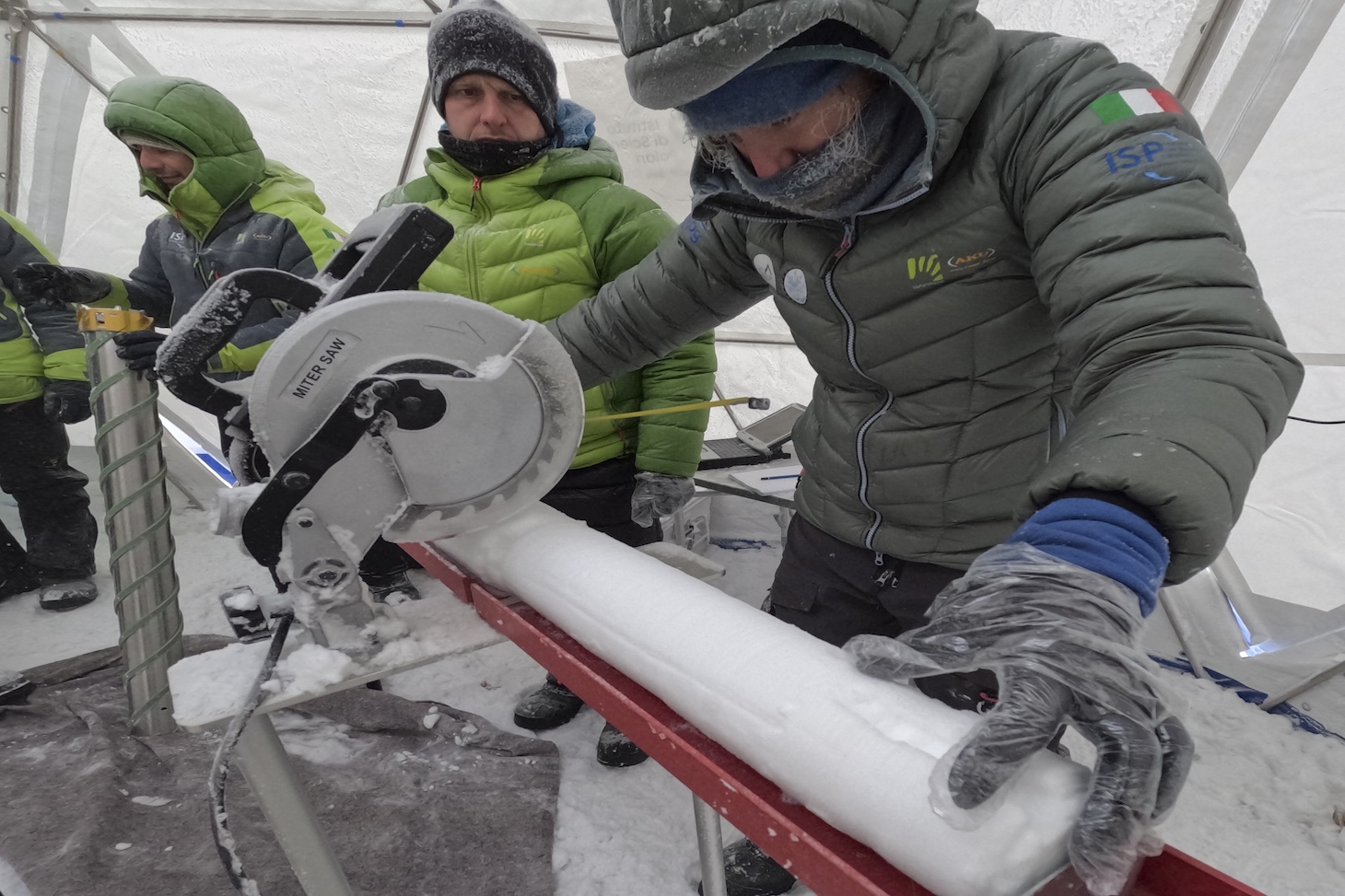
Recent analyses carried out on
ice cores drilled in Svalbard (Arctic) in 2023 illustrate the extraordinary potential of ice archives.
Through the
IceLife project, Andrea Spolaor from
CNR (Italy) and Catherine Larose from
CNRS (France) are studying the
DNA, RNA and metabolites of microorganisms trapped in the ice to understand how
Arctic ecosystems responded to
past climate variations.
Ice cores can also reveal unexpected dimensions of environmental history. Recent research shows that
glaciers preserve traces of antibiotic resistance genes (ARGs) linked to past heavy metal pollution.
Because resistance to metals and antibiotics can be co-selected within microbial communities,
centuries of atmospheric contamination may have indirectly shaped today’s resistance patterns. By analyzing these frozen biological archives, scientists can reconstruct how
human activities — from early metallurgy to the industrial era — influenced microbial adaptation.
These innovative bio-datasets — extracted from a region warming four times faster than the global average — open a new scientific frontier:
ice cores not only record temperature and atmospheric composition, but also preserve traces of life itself.
When Pamir ice decodes regional climate variability
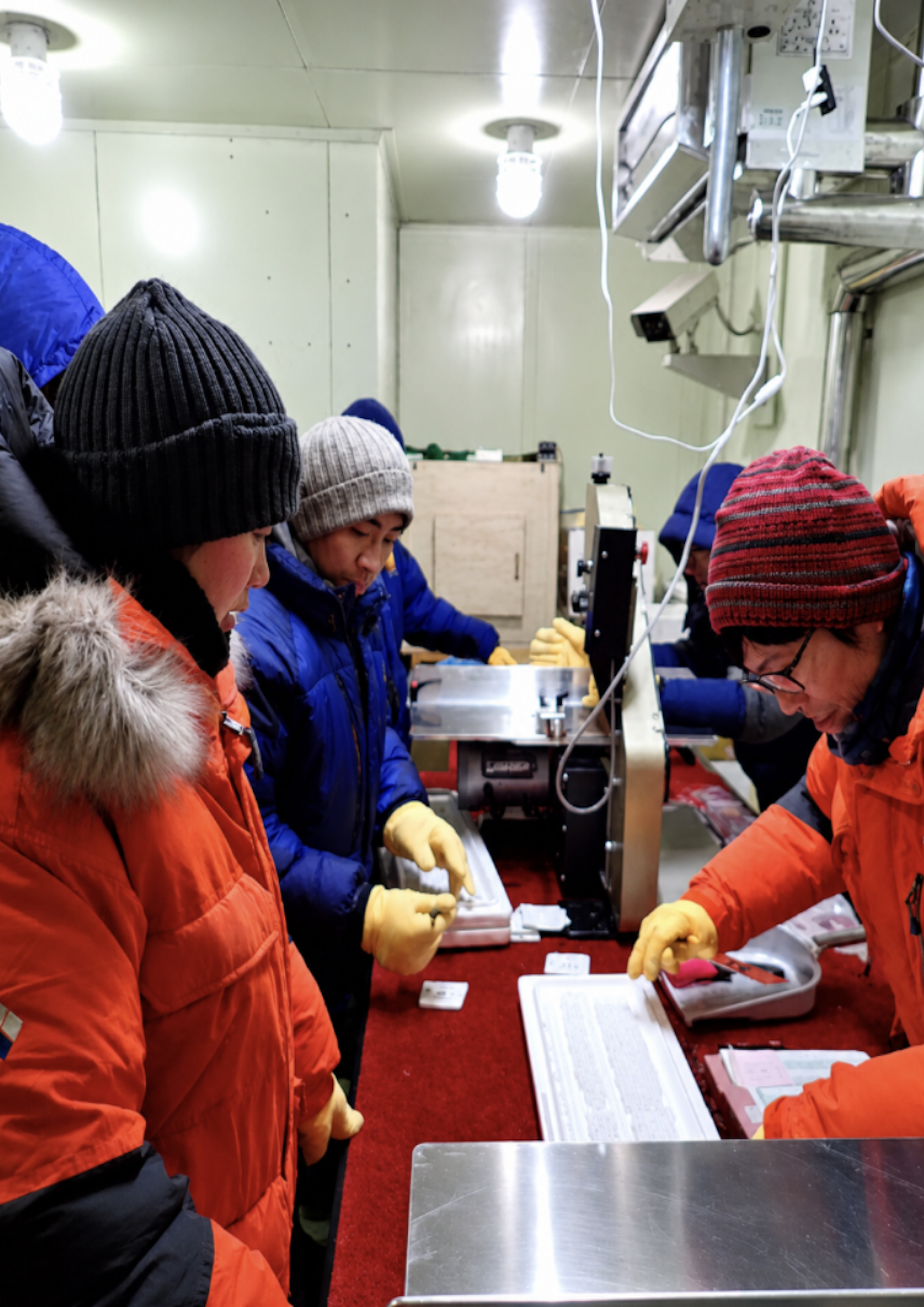
Recent analyses carried out on the
ice core drilled in 2025 on
the Kon Chukurbashi glacier in the Pamir Mountains (Tajikistan) highlight the scientific value of
high-altitude Asian climate archives.
Now analyzed at
the Institute of Low Temperature Science, Hokkaido University (Japan), the core is being used to establish a precise
age–depth relationship through tritium markers, volcanic deposits, density profiling and high-resolution X-ray imaging. These methods allow scientists to reconstruct more than
700 years of climate variability in a region influenced by the
Pamir–Karakoram anomaly.
Preliminary results reveal possible decadal oscillations in firn density, a warmer phase around 10–15 meters depth (potentially corresponding to the 1970s), and a high-resolution dust record likely reflecting
regional wind strength and storm activity. Early ion analyses also provide promising signals of
past summer conditions.
Together, these data demonstrate how mountain ice cores not only document
long-term climate trends, but also capture
regional atmospheric dynamics with remarkable precision.
The Chernobyl signature in alpine ice
The
1986 Chernobyl nuclear accident left a distinct caesium-137 peak in Alpine glaciers. This marker provides an exact chronological reference within ice cores and illustrates the capacity of glaciers to preserve
evidence of major environmental events.