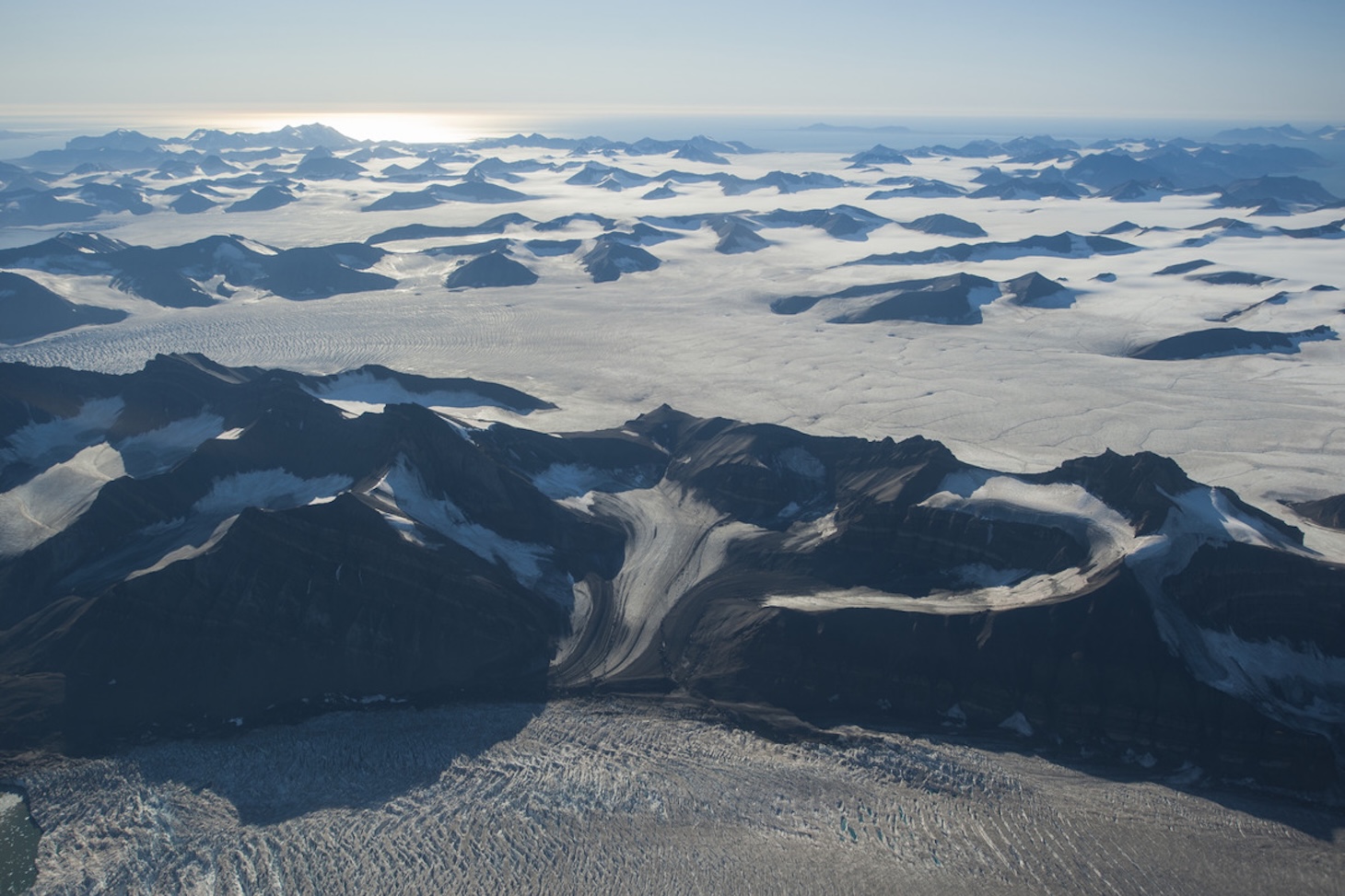
Ice Memory is not a research program—it is a heritage initiative that safeguards samples and associated data for future generations.
Preserving ice cores today ensures that their climatic and environmental records remain available for future scientific discoveries.
Key objectives:
Provide reference material for future technologies
Support long-term environmental research
Inform decision-makers and society
What kind of data do ice cores contain?
Ice cores are natural archives that record past environmental and climatic conditions.
Climate indicators
Stable water isotopes (temperature and precipitation)
Greenhouse gases (CO₂, CH₄, N₂O)
Atmospheric composition
Environmental tracers
Mineral dust and aerosols
Volcanic ash and pollutants
Heavy metals and industrial emissions
Radioactive and chronological markers
Tritium from nuclear tests
Caesium-137 from the Chernobyl accident
Beryllium-10 linked to solar activity and snowfall
Emerging biological records
Microorganisms (DNA/RNA) preserved in ice
Metabolites and biomarkers
Environmental microbiology indicators
How will this data be used tomorrow?
The Ice Memory Database ensures that future scientists can access high-quality reference data, even after glaciers have disappeared.
Future applications include:
Reconstructing past climates and environmental changes
Improving climate models and predictions
Studying atmospheric pollution and ecosystem dynamics
Advancing microbiological and genomic research
Supporting policy-making and climate adaptation strategies
Published on November 18, 2026 Updated on November 18, 2026
Share the linkCopyCopiedClose the modal windowShare the URL of this pageI recommend:Consultable at this address:La page sera alors accessible depuis votre menu "Mes favoris".Stop videoPlay videoMutePlay audioChat: A question? Chatbot Robo FabricaMatomo traffic statisticsX (formerly Twitter)